


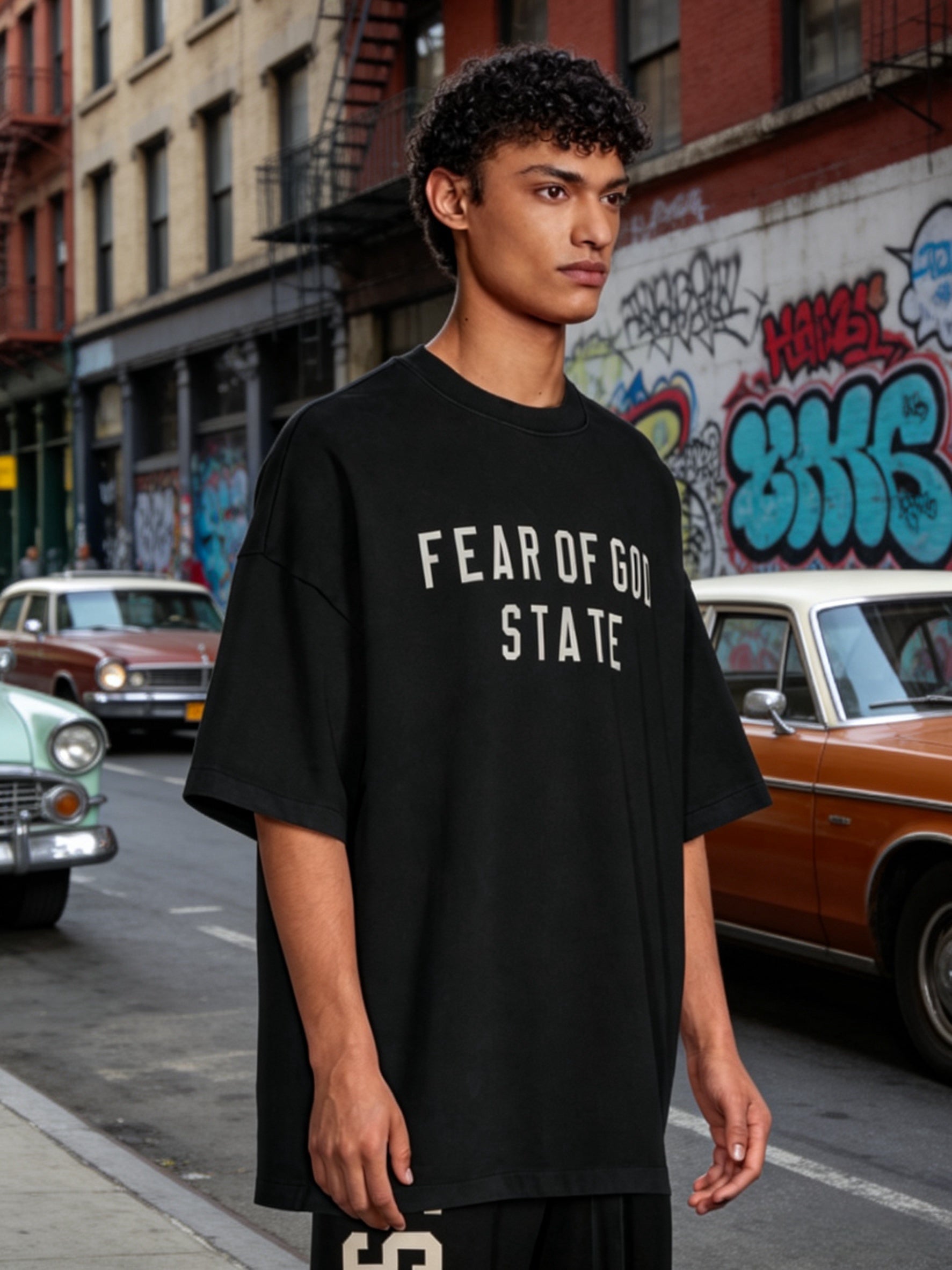
If you’ve ever bought a “good black tee” and still kept reaching for an old one, you already know the truth: a tee earns rotation by how it behaves after five hours, not how it looks in a flat-lay. Fear of God Essentials Heavy Crewneck Tee Black is built for that behavior test. This post is a simple comparison brief—Heavy Tee vs Regular Tee—focused on what changes when the jersey has real weight: drape, collar stability, layering performance, and how the tee reads in real lighting.
The Angle: Heavy Tee vs Regular Tee (What Actually Feels Different)
A regular tee can look fine at first, then it starts doing “regular tee things”: clinging in humidity, twisting after washing, collapsing at the collar, and looking like an undershirt once you take your jacket off. A heavy crewneck changes the day-to-day experience. The silhouette stays straighter, the sleeves look more substantial, and the surface reads calmer under bright light.
That’s why I treat this as a wardrobe tool. You’re not buying “another black tee.” You’re buying the version that lets you build outfits faster because the shape stays consistent.
Decision Points: When Heavy Wins (And When It Doesn’t)
Heavy wins if you want the tee to function as a main layer, not a hidden base. It also wins if you care about collar stability and a clean drape through the body.
Regular wins if you live in extreme heat and want maximum airflow, or if you only wear tees under hoodies and never take the top layer off.
If your “black tee problem” is that it looks tired too quickly, the heavy option is usually the fix—because it holds its line longer.
Unique Block: The Collar & Shoulder Test (The Fastest Way to Tell)
Here’s the quickest comparison I use: put on the tee, wear a bag for ten minutes, then look at the neckline and shoulder line in a mirror. A regular tee often starts to ripple at the collar and soften at the shoulders, especially once straps add friction. A heavy crewneck stays flatter because the rib crewneck and the fabric weight resist that collapse. The shoulders also tend to look cleaner, even with a relaxed cut, because the fabric holds a straighter line before it drapes. That’s the practical difference behind Heavy Tee vs Regular Tee: you get a tee that looks like a “top,” not a layer you forgot to swap out.
Fit & Sizing: How to Keep Heavy Looking Intentional
Heavy tees can look incredible or a little blocky—depending on how you balance them. I focus on two things:
1) Shoulder landing. Slightly relaxed is fine; overly dropped can make the tee look like it’s wearing you.
2) Bottom silhouette. If the tee is roomy, keep pants readable: straight denim, tapered cargos, or structured sweats. If you go wide-leg, make sure shoes have enough presence to balance the volume.
If you prefer a cleaner outline, sizing down is often the move with heavyweight silhouettes. If you want modern street proportion, keep it relaxed and control the bottom.
Three Use Cases Where Heavy Beats Regular
Scenario 1: Long museum afternoon (warm galleries, cold corridors, lots of standing)
Wear the tee with charcoal trousers and minimal sneakers. The heavy drape keeps the torso looking clean when you’re moving between rooms and lighting changes. If you add a layer, keep it open so the tee stays the quiet center.
Scenario 2: Late-day grocery run in harsh lighting (overhead glare, quick mirrors)
Pair with washed black denim and a clean cap. Regular tees can look shiny or thin under overhead light; heavyweight surfaces usually read calmer. Keep accessories minimal so black stays sharp and not busy.
Scenario 3: Work-from-anywhere café (sitting, standing, laptop strap friction)
Go with tapered cargos and simple sneakers. This is the collar test in real life: a heavy crewneck stays flatter after hours of sitting and moving, so you still look put-together when you stand up and leave.
Unique Block: Layering Math (Why Heavy Simplifies Outfits)
Heavy tees simplify layering because they hold their shape when they’re the only visible layer under a jacket. A regular tee often needs help—an extra overshirt, a louder accessory, a hoodie—because it can look too “base.” With a heavy crewneck, you can wear a cleaner outer layer and let the tee do more of the visual work. I treat it like a “soft structure” piece: it gives you a stable neckline, a straighter torso line, and sleeves that look intentional. That’s why Heavy Tee vs Regular Tee matters—one version makes you style more, the other makes you style less.
Care & Longevity: Keep Black Looking Deep
Black tees get judged up close. Wash inside out, cold, and avoid overloading the machine—friction is what makes the surface look dusty and tired. Air drying helps the collar stay flatter and keeps the drape more consistent. For a reliable reference point on typical construction details for this style (cotton jersey, rib knit crewneck, dropped shoulders, and minimal logo treatments), this listing is a useful baseline: SSENSE — Fear of God ESSENTIALS Black Crewneck T-Shirt.
Where to Click Next (Build a Consistent Rotation)
If you want this tee to function as a weekly uniform piece, compare Essentials tones first, then scan tees so your base layers stay consistent. Start here: AFV — Essentials Collection.
Final Notes
A heavy black crewneck tee is not about hype. It’s about repeat wear and stable shape. If you want one tee that looks like a “real top” when the jacket comes off, Heavy Tee vs Regular Tee is the comparison that matters.
Share:
Fear of God Essentials Heavy Crewneck Tee Lavender — Pastel Weight, Clean Structure
Fear of God Essentials Classic Fit Fleece Hoodie Homestead Heather — Core Fleece Midtone System